
Should I pack the voltage detector?
This tiny device is the first thing you’ll use to assess whether your Bear Sentry is working properly after set up and before bed. Position it near a line: a beep and a blink means the fence is “on.” You should also hear a clicking sound from the energizer (we explain what this means here).

But you’ll still need to ensure that your voltage is optimal: the “pressure” that enables the fence to make an electrical connection with a bear (see How a Bear Sentry works).
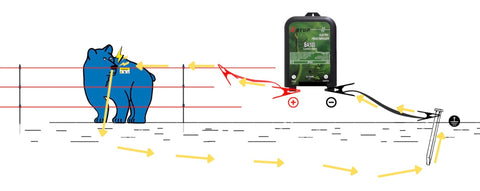
The best and more likely scenario has the bear touching the polywire with its nose. That moist, bare skin will allow a relatively easy connection - “low voltage required.”
Your warning signs attract curious wet noses to the line.

But wild animals are unpredictable. If it’s a furry body part that hits the wire, the bear’s hair will insulate its skin from the electrical charge. The voltage required to push through 1/8” (3mm) fur is about 5,000V. This is the generally accepted ‘bare’ minimum spec for a bear fence, though it takes roughly 6,000V to shock a Black Bear.
We don’t design for minimums, however (except for packable weight). The Bear Sentry energizer is rated for 8,500V - think big, hairy Grizzly.
 Even so, dry conditions - on the bear and underpaw - can lower this potential. And a ground fault (short circuit) through grass or a branch touching a line could cause voltage drop.
You can’t do much about the dampness of a bear (short of camping with a moat around you), but you can water your ground stake and even the area outside the fence where the bear would stand. (Pro tip from a customer: pull out the ground stake, pour water down the hole).
Then check the perimeter for ground faults, and re-tension the fence. We illustrate this here